What can I say? I actually like all of the featured weeks during Non-fiction November – I know that I said last week the book pairings one was a favorite of mine – but so is the Be The Expert/Ask The Expert/Become the Expert. This year I’m going the Become the Expert route based on my desire to continue reading about the role of class and race in the U.S. This theme drew my interest after I listened to Caste by Isabel Wilkerson earlier this year. For me, this week is always fun because I can dig into recommendations for books from a variety of sources – this year my Become the Expert recommendations came from “Readers Also Enjoyed” off Goodreads for the Caste book entry as well as from the Read-alikes section of NoveList (which is a service I just discovered from my library).
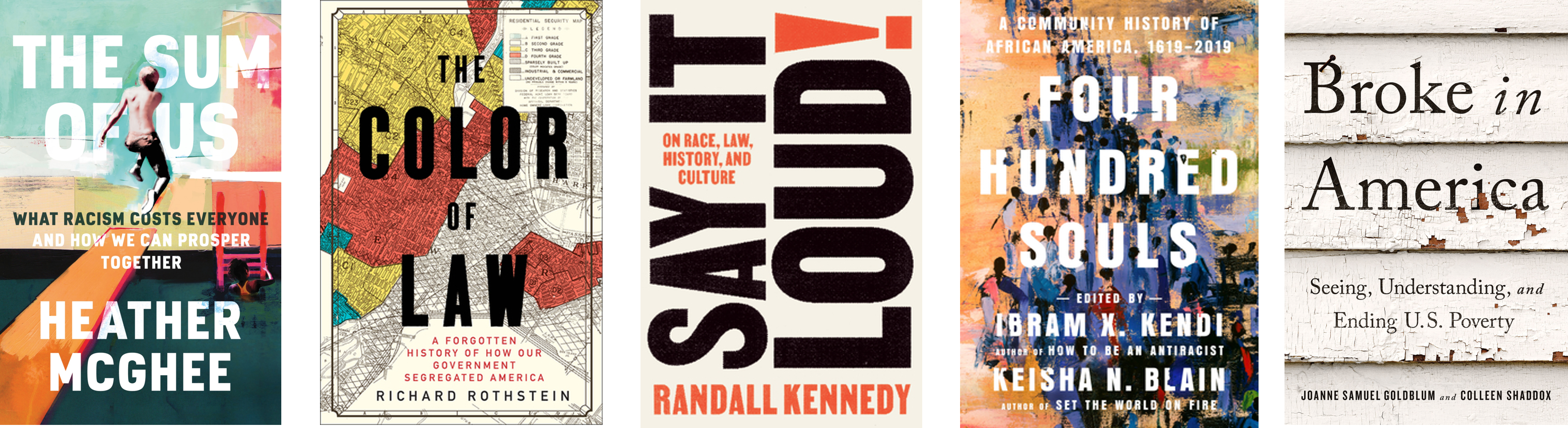
The Sum of Us – Heather McGhee – I first came across this book when I was looking for one to nominate for a group read in one of my Goodreads groups. What drew me to this book was that it doesn’t just address racism with relation to the African-American population, but also how it impacts White Americans and individuals who identify with other racial groups. I like the authors’ hypothesis of the Solidarity Dividend that gains will come when we come together across race to achieve goals.
The Color of Law – Richard Rothstein – Recently the Secretary of Transportation (Pete Buttigieg) came under fire for a statement made during a press conference about how infrastructure in the US was influenced by racist policies that placed certain groups of citizens at disadvantages. I had heard about some of these policies (ie. Redlining) in passing but hadn’t read anything in-depth. I figure if I wanted to learn more about these policies, then reading a book about the history of different housing laws and policies would be a good place to start.
Say It Loud – Randall Kennedy – This is a relatively new release (September 2021) but spans two decades of events and derived legal analysis – the listed essays are written by many key contributors to the body of research on race and class in the United States. Topics of essays include The George Floyd Moment: Promise and Peril and The Constitutional Roots of “Birtherism” I’m planning on using this book to fulfill the collection prompt for this year’s event.
Four Hundred Souls – Ibram X. Kendi and Keisha N. Blain – I have to say this out loud, I actually didn’t finish How to be Anti-racist (in that the audiobook just wasn’t working for me and I have the print version on my ebook wishlist) – but that being said, Four Hundred Souls went immediately on my to-be-read pile when it was released earlier this year. Similar to Say It Loud, Four Hundred Souls is a series of essays – but rather than key events in history and legal decisions, Four Hundred Souls covers over four hundred years of history.
Broke in America – Joanne Samuel Goldblum and Colleen Shaddox – I’ve always found myself in a relatively privileged situation – meaning that I don’t struggle to find food each day, I’ve had access to good education and consistent employment through my adult life. However, not everyone in the US has had those advantages, in fact from the book description, nearly 40 million people in the US live below the poverty line (as defined by $26,200 for a family of four). I’ve previously read some books about poverty in the US (specifically Evicted: Poverty and Profit in the American City by Matthew Desmond and $2.00 a Day: Living on Almost Nothing in America by Kathryn Edin) so I’m hoping to broaden my knowledge on this topic to better inform my perspective and understanding.
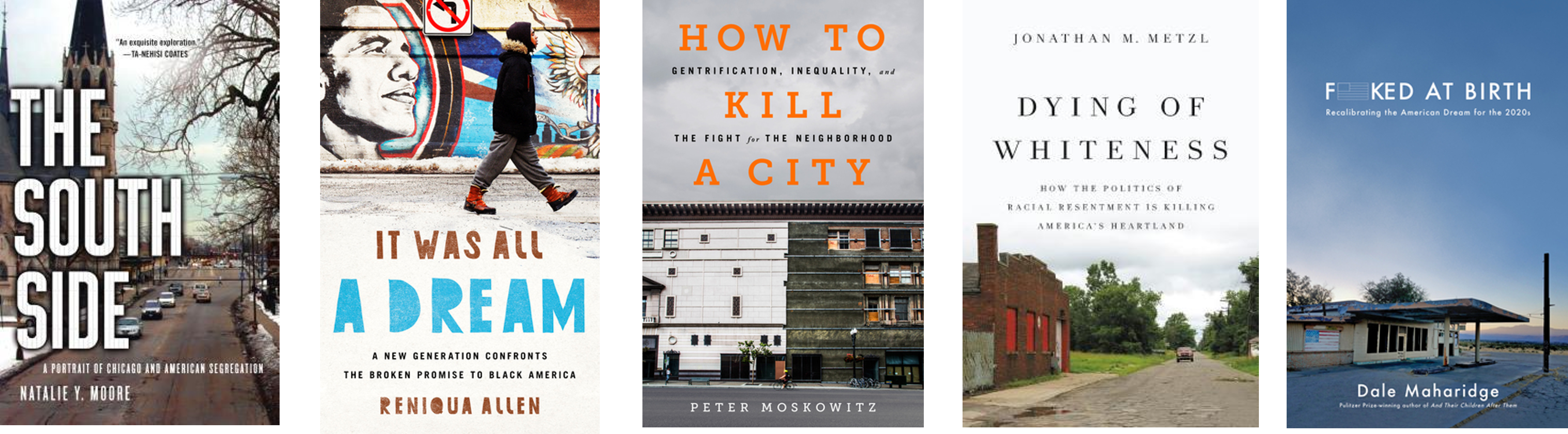
The South Side – Natalie Y. Moore – as I write this post, I’m sitting in Chicago visiting my sister – so this book caught me eye as it looks at how the city has become segregated which ties into many of the themes mentioned in Caste. As with several of the other books i’ve picked, the story is told through a series of essays. Reviews seem to be kind of hit or miss for this (they seem to bounce between either 1 star of 5 stars on goodreads) – so it will be interesing to see what side i come out on.
It Was All A Dream – Reniqua Allen – Often after reading a news article about a social policy that has detractors, or some kind of event that caused civil unrest – i hear, well, they just need to do better or work harder to get a better life (or other trite sayings). From reading the description, this book tells the stories of young Black Americans trying to do just that. I fall squarely into the millenial population, so the people who’s stories are in this book, are my peers which makes it even more attractive to me.
How To Kill A City – Peter Moskowitz – I remember when I moved to Maryland in 2010, I was working at the Navy Yard and the short 10 minute walk from the metro was just not something you did in the middle of the night (and since I was on shift-work, it was part of my routine) – now, I walk through the same area that has been completely gentrified to include new condos that cost in the 1 million plus range. I had never really thought about the impact those changes have on the general population who can’t afford to live in those areas (and its gotten even worse since the pandemic with the real estate market going insane). That is part of what caught my attention when I was reading the description of this book – understanding how these housing policies affect certain segments of the population.
Dying of Whiteness – Jonathan M. Metzl – I know this book and its connect to the others mentioned in this post is very tenuous but its something that I found intriguing. As I watch the political cycle play out in the US (most recently with the Infrastructure Bill that was just signed), I have to wonder why representatives vote against policies that will help their communities but also why do communities keep voting for people that don’t appear to have their best interests at heart. This book seems like it might try to dive into some of those reasons through the eyes of a Doctor in America’s Heartland. I have a feeling this could be a controversial read which is why I currently have it sitting in my car (in print) and I can’t wait to dig into it – although I likely won’t finish it this Non-Fiction November.
Fucked at Birth – Dale Maharidge – ok so i’ll totally admit that the only reason I added this book to my to-read pile aside from the theme was because of the title. There has been a lot in the media lately about social aid to the population (Universal Pre-K; Universal Basic Income, increases to social safety nets) – the purpose of this book seems to be examining how those could be used to help people get ahead – those who are quote “fucked at birth” and its seen as fate that people just have to live this way. It seems to be a fairly short book – doubt I’ll get it read this month – but i’m intriguing.
Here are a quick summary of a few books that I will help will let me start becoming the expert on race and social class in the US.
Do you have any books that you think I should add to my list?
 Dee's Book Blog